
 HOME
 WAEC
 NECO
 07048281409

BEST EXPO RUNZ ASSISTANCE WEBSITE. NO.1 BEST DELIVERY OF EXAM RUNZ
100% GUARANTEE OF GETTING ANSWERS MIDNIGHT..IT’S OUR CULTURE, NO DOUBT
===================================
BIOLOGY OBJ
01-10: AECBAACADE
11-20: ECBDEBCDEA
21-30: CADBCDEBBD
31-40: DACEDDACBB
41-50: DBABEBEDAE
51-60: AAAEBDCBBB
COMPLETED
===================================
INSTRUCTION: ANSWER THREE(3) QUESTIONS ONLY
(1ai)
Tolerance is the ability of an organism to withstand or endure changes in environmental conditions such as temperature, humidity, light, or salinity within certain limits without dying.
(1aii)
(i) Oxygen
(ii) Digested food substances
(iii) Carbon dioxide
(iv) Hormones
(1b)
(i) Prophase
(ii) Metaphase
(iii) Anaphase
(iv) Telophase
(1c)
(i) Living in colonies (social behaviour): Termites live in colonies, which provides protection, cooperation, and increased chances of survival.
(ii) Division of labour: Members of the colony are divided into castes such as workers, soldiers, kings, and queens, each performing specialized functions necessary for the survival of the colony.
(iii) Construction of tunnels and mounds: Termites build tunnels and mounds that protect them from predators, excessive heat, and desiccation while enabling them to search for food safely.
(iv) Food sharing (trophallaxis): Termites feed one another by regurgitating food or transferring food materials among colony members, ensuring that all members obtain nourishment.
(v) Defensive behaviour: Soldier termites defend the colony against predators and intruders using their strong mandibles or chemical secretions.
===================================
(2ai)
(i) Contractile vacuole
(ii) Flame cell (protonephridium)
(iii) Nephridium
(iv) Malpighian tubule
(v) Kidney
(2aii)
(i) Contractile vacuole : Amoeba
(ii) Flame cell: Tapeworm
(iii) Nephridium: Earthworm
(iv) Malpighian tubule: Cockroach
(v) Kidney: Human being
(2bi)
(i) Both remove metabolic waste products from the body.
(ii) Both help in osmoregulation by maintaining the water and salt balance of the body.
(2bii)
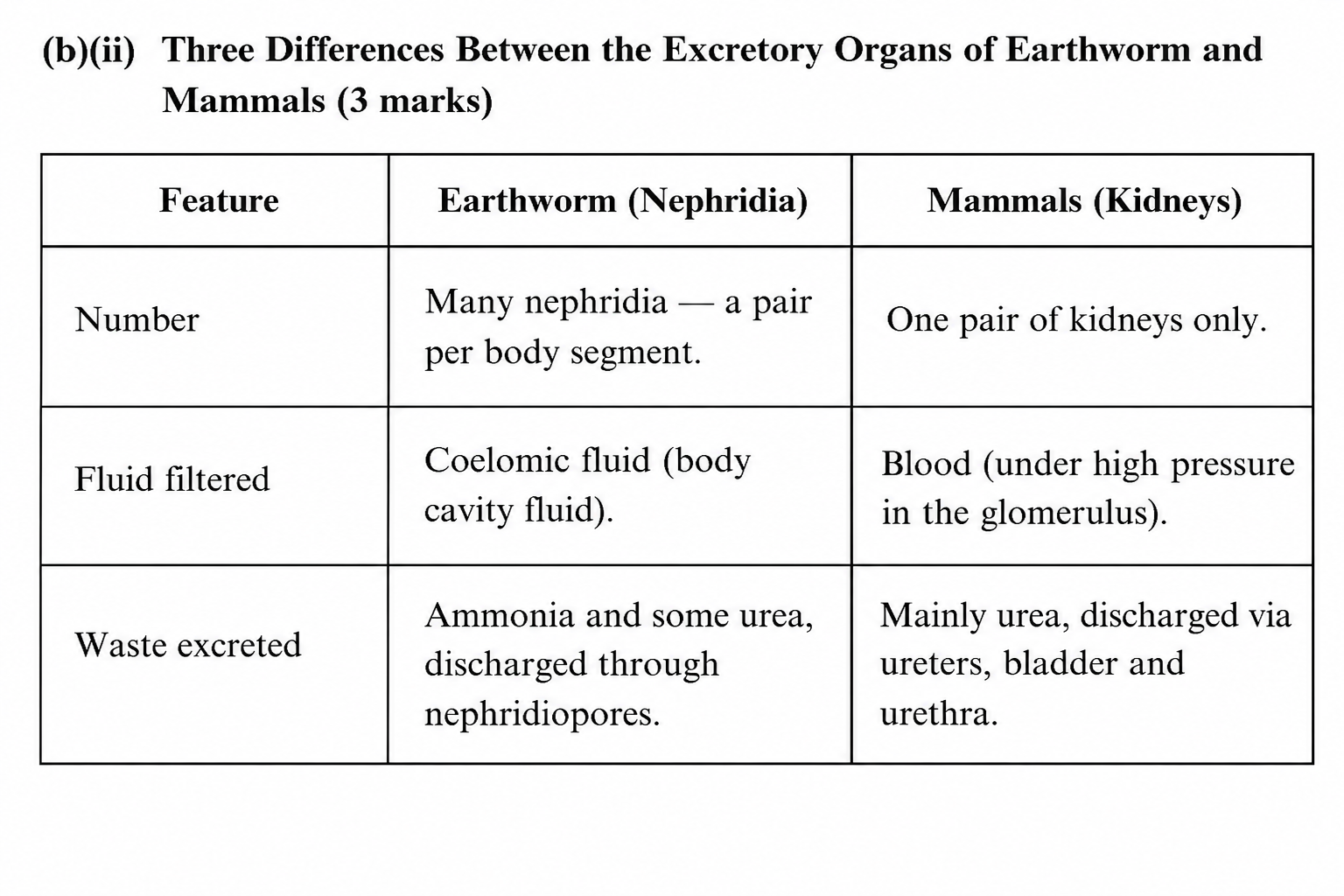
(2c)
=Opening of Stomata=
(i) During the day, guard cells actively accumulate soluble sugars or potassium ions.
(ii) The concentration of solutes in the guard cells increases, lowering their water potential.
(iii) Water enters the guard cells from surrounding cells by osmosis.
(iv) The guard cells become turgid.
(v) Because the outer walls are thinner and the inner walls are thicker, the guard cells curve outward, causing the stomatal pore to open.
=Closing of Stomata=
(i) At night or during water shortage, sugars or potassium ions move out of the guard cells.
(ii) The water potential of the guard cells increases.
(iii) Water moves out of the guard cells by osmosis.
(iv) The guard cells become flaccid.
(v) The guard cells straighten and the stomatal pore closes.
===================================
(3ai)
=Protein=
(i) Carbon
(ii) Nitrogen
=Carbohydrate=
(i) Carbon
(ii) Hydrogen
(3aii)
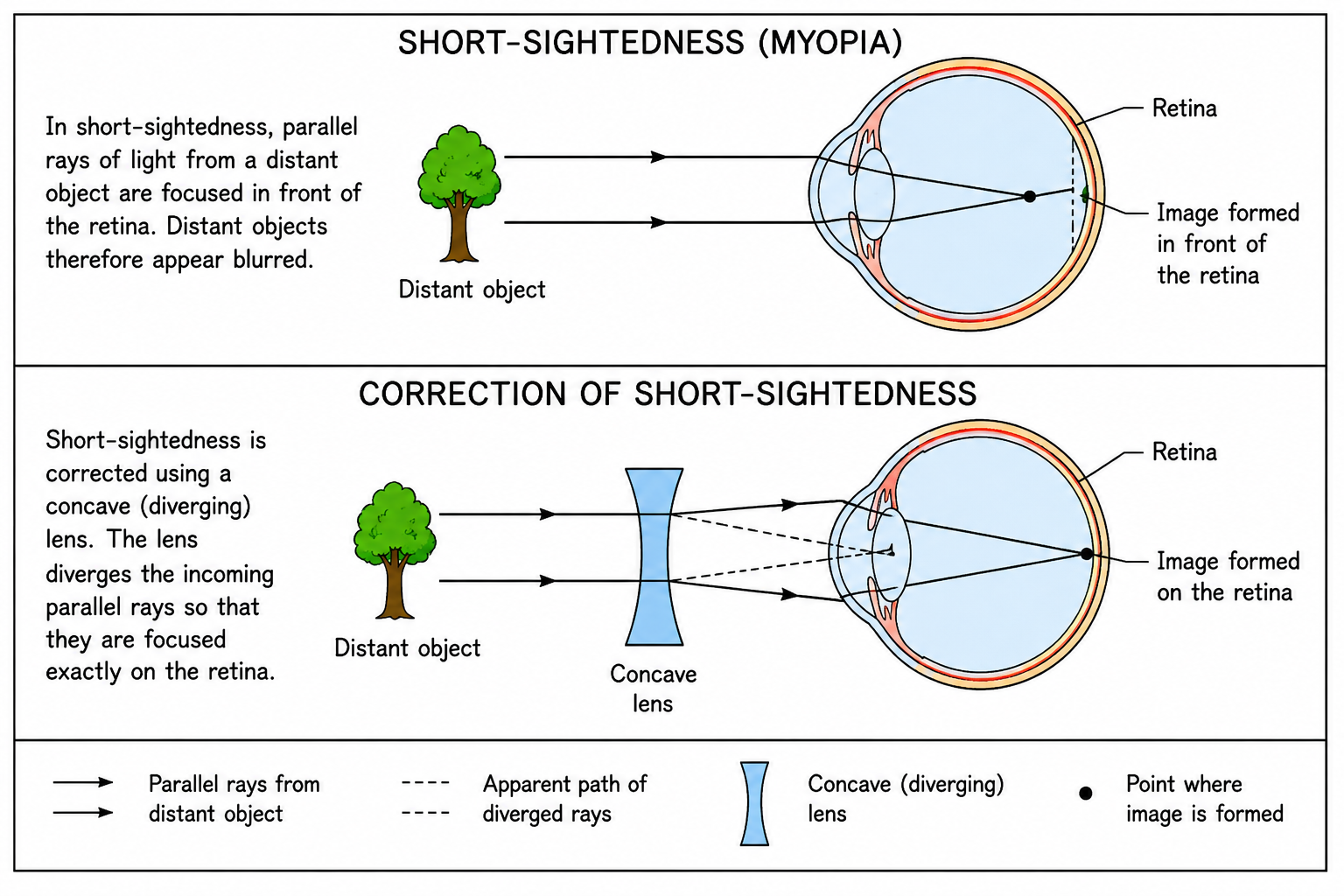
(3aiii)
(i) Birth rate
(ii) Death rate
(3b)
(i) Swarming: Swarming is the movement of a large number of organisms together from one place to another, usually for the purpose of reproduction, migration, or colonization.
(ii) Epidemic: An epidemic is the sudden outbreak and rapid spread of a disease among a large number of people or organisms within a particular area at a given time.
(3ci)
Parthenocarpy is the development of a fruit without fertilization, resulting in the production of seedless fruits.
(3cii)
(i) Condom
(ii) Oral contraceptive pills
===================================
(4ai)
(i) Enzymes are protein in nature.
(ii) Enzymes are specific in their action.
(iii) Enzymes are not used up during the reactions they catalyse.
(4aii)
Pupil: Regulates the amount of light entering the eye.
Conjunctiva: Protects the eye and keeps its surface moist.
Cornea: Refracts (bends) light rays entering the eye and helps to focus them on the retina.
(4bi)
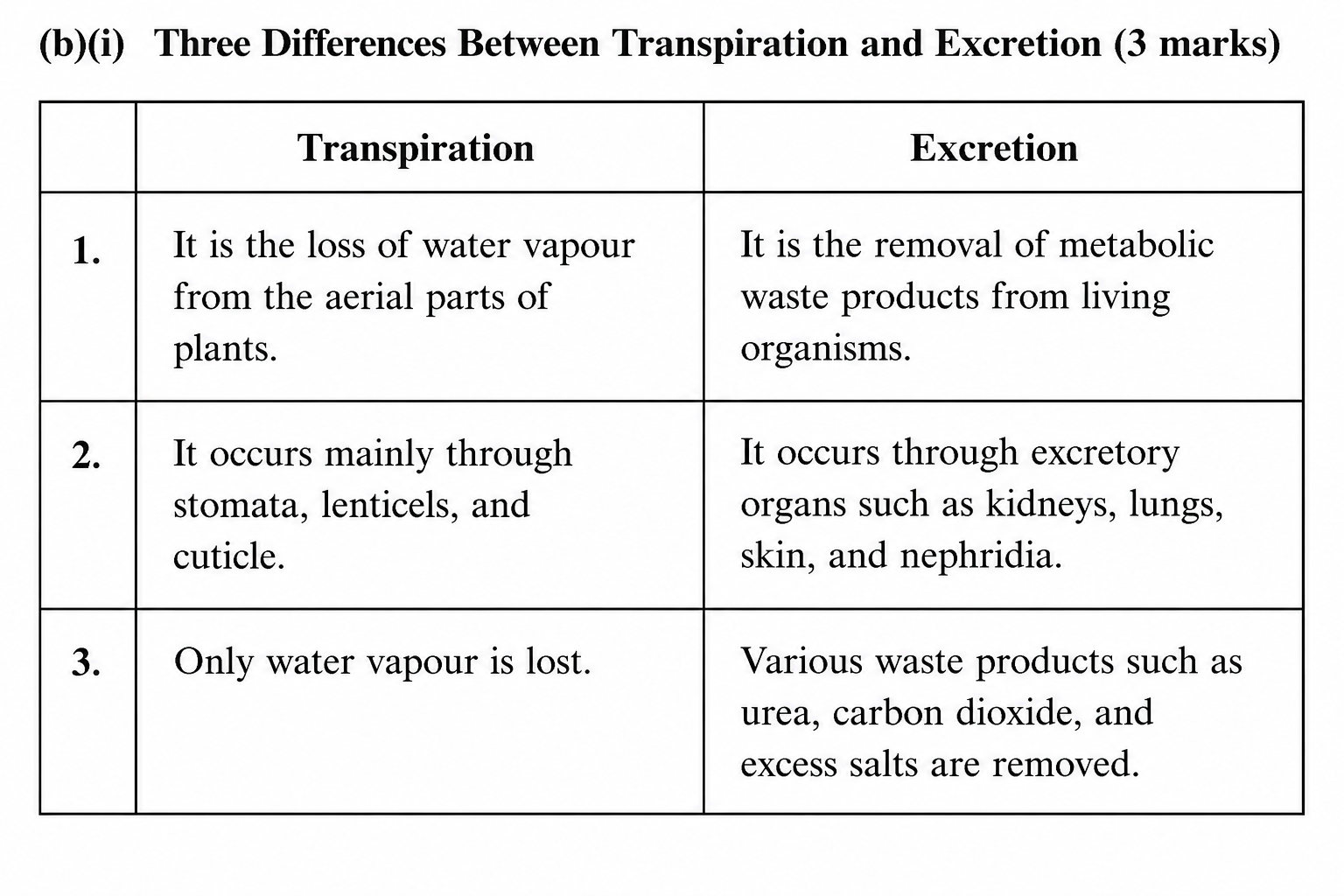
(4bii)
(i) Shoulder joint.
(ii) Hip joint.
(4c)
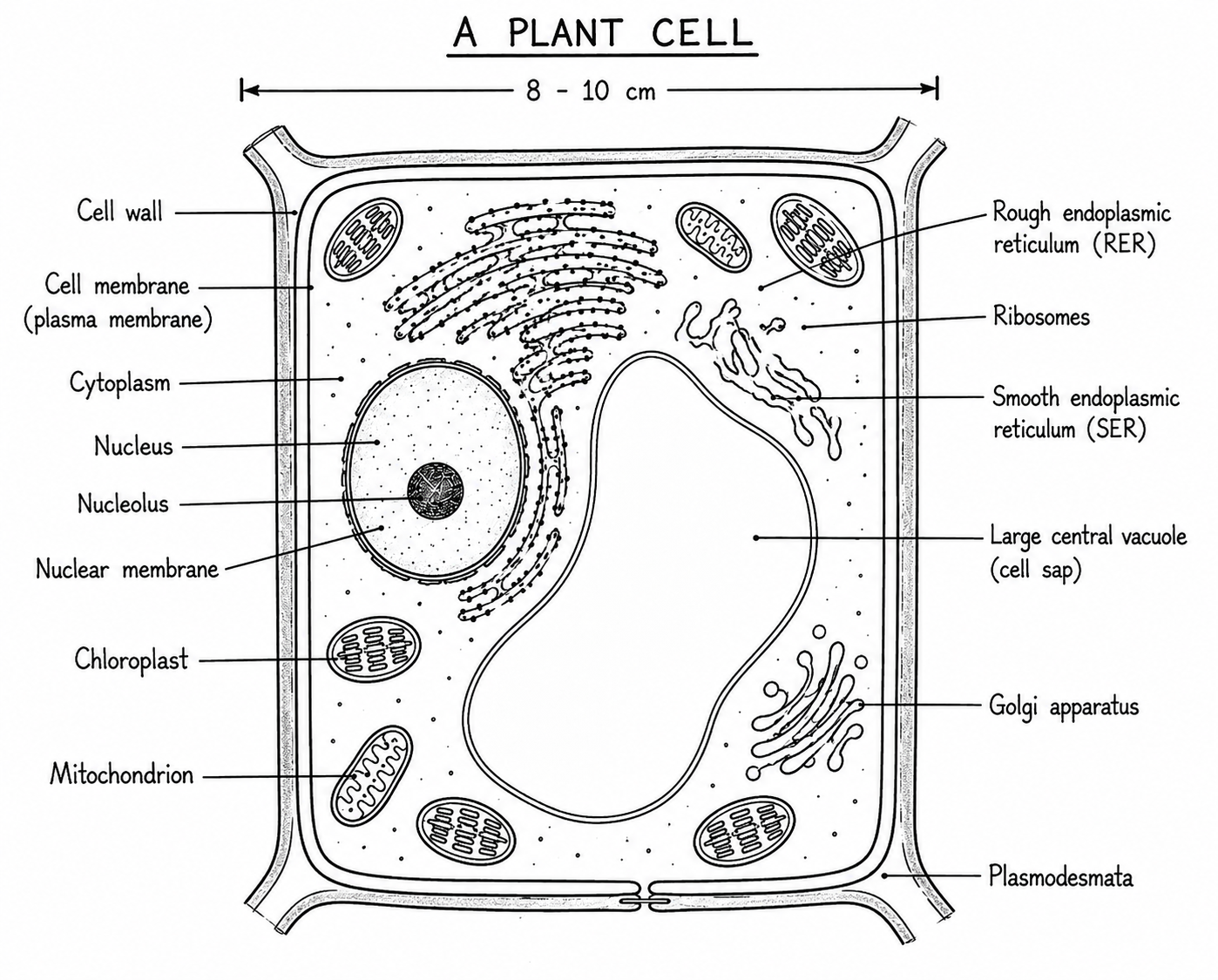
===================================
(5ai)
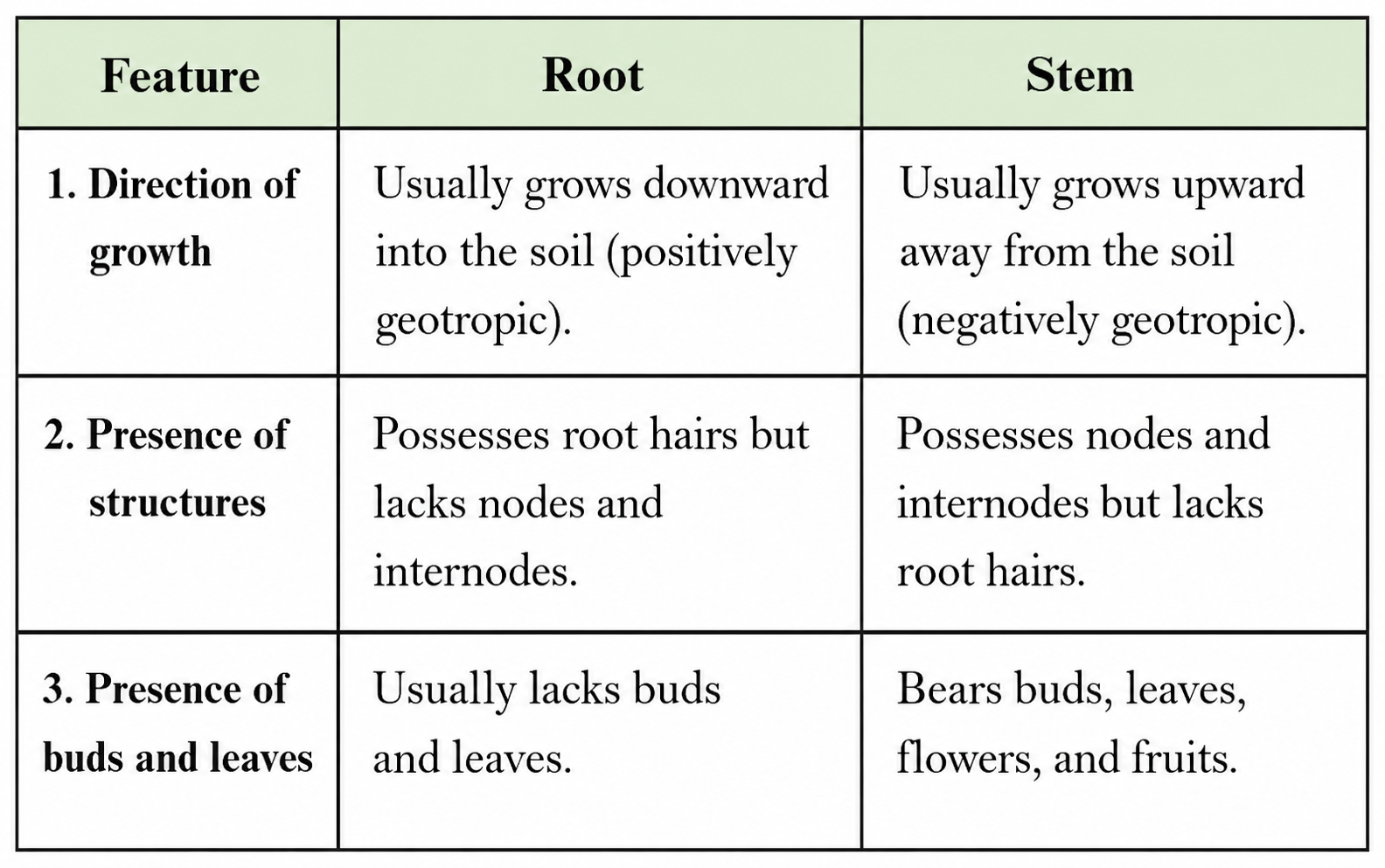
(5aii)
(i) It has a large and thick centrum for supporting body weight.
(ii) It possesses a short and broad neural spine.
(iii) It has large transverse processes for muscle attachment.
(5bi)
(i) Parenchyma
(ii) Collenchyma
(iii) Sclerenchyma
(5bii)
Haemophilia: Haemophilia is a sex-linked hereditary disorder in which the blood fails to clot normally, resulting in excessive bleeding.
Mutation: Mutation is a sudden and permanent change in the genetic material (gene or chromosome) of an organism
Sex-linked Character: A sex-linked character is a trait controlled by genes located on the sex chromosomes, especially the X chromosome.
(5ci)
(i) Subsistence farming
(ii) Commercial farming
(iii) Mixed farming
(5cii)
(i) Drying (dehydration)
(ii) Refrigeration
===================================
COMPLETED….We Remain Your Favourite Site.
Ensure You Subscribe For Your Next Paper
===================================
Leave a Reply