
 HOME
 WAEC
 NECO
 07048281409

BEST EXPO RUNZ ASSISTANCE WEBSITE. NO.1 BEST DELIVERY OF EXAM RUNZ
100% GUARANTEE OF GETTING ANSWERS MIDNIGHT..IT’S OUR CULTURE, NO DOUBT
═══════════════════════════
SECTION A: ANSWER ALL QUESTIONS
(1)
(i) Dry expansion evaporators.
(ii) Flooded evaporators.
═══════════════════════════
(2)
(i) Electric resistance defrosting.
(ii) Hot gas defrosting.
═══════════════════════════
(3)
(i) Grease lubrication.
(ii) Oil lubrication.
═══════════════════════════
(4)
(i) Insufficient lubrication: Inadequate or poor-quality lubricant increases friction between the bearing surfaces, resulting in excessive heat.
(ii) Bearing misalignment or overloading: Incorrect alignment or excessive mechanical load increases friction and pressure on the bearing, causing overheating.
═══════════════════════════
(5)
(i) Ensure that the motor and compressor pulleys are properly aligned.
(ii) Adjust the belt tension correctly to prevent slipping or excessive strain on the motor and bearings.
═══════════════════════════
(6)
(i) Failure to start: This may be caused by a faulty capacitor, damaged winding, loose electrical connection or seized bearing.
(ii) Excessive noise and vibration: This may result from loose mounting bolts, unbalanced fan blades, worn bearings or a bent shaft.
═══════════════════════════
(7)
(i) Disconnect the power supply before carrying out any servicing.
(ii) Check the electrical terminals, wiring and insulation for damage or loose connections.
(iii) Test the motor windings for continuity, short circuit and insulation resistance to earth using a multimeter and megger.
(iv) Check the starting and protective devices (relay, start and run capacitors, overload protector) and replace any that are faulty.
(v) Measure the running current and the suction and discharge pressures, and check for abnormal noise or overheating, to confirm that the compressor is pumping properly.
(vi) If the motor is burnt out, replace the compressor unit, flush the system, fit a new filter-drier, then evacuate, recharge and test the system.
═══════════════════════════
(8)
(i) Automatic temperature control of refrigeration compressors.
(ii) Temperature control of air-conditioning systems.
═══════════════════════════
(9)
An automatic ice maker operates by allowing water to enter a mould or ice tray through an electrically controlled valve. The refrigeration system cools the mould until the water freezes into ice cubes. A thermostat or temperature sensor detects when the ice is ready and activates the harvesting mechanism, which releases the ice cubes into a storage bin. The water supply is then replenished and the cycle repeats automatically.
═══════════════════════════
(10)
(i) Polyurethane foam.
(ii) Expanded polystyrene foam.
═══════════════════════════
SECTION B: ANSWER FIVE(5) QUESTIONS ONLY
(11a)
(i) Disconnect the electrical supply: Switch off the main power supply and isolate the unit to prevent electric shock.
(ii) Recover the refrigerant: Remove the refrigerant from the system using an approved recovery machine and store it in a suitable recovery cylinder.
(iii) Disconnect electrical connections: Label and disconnect the electrical wires connected to the compressor motor, including the terminals and control wiring.
(iv) Disconnect and remove the compressor: Disconnect the suction and discharge pipes, remove the mounting bolts and carefully lift the compressor out of the unit.
(11b)
(i) Low supply voltage or voltage imbalance, which can cause excessive current and overheating of the motor windings.
(ii) Poor cooling or inadequate lubrication, resulting in excessive operating temperature and damage to the motor windings.
═══════════════════════════
(12)
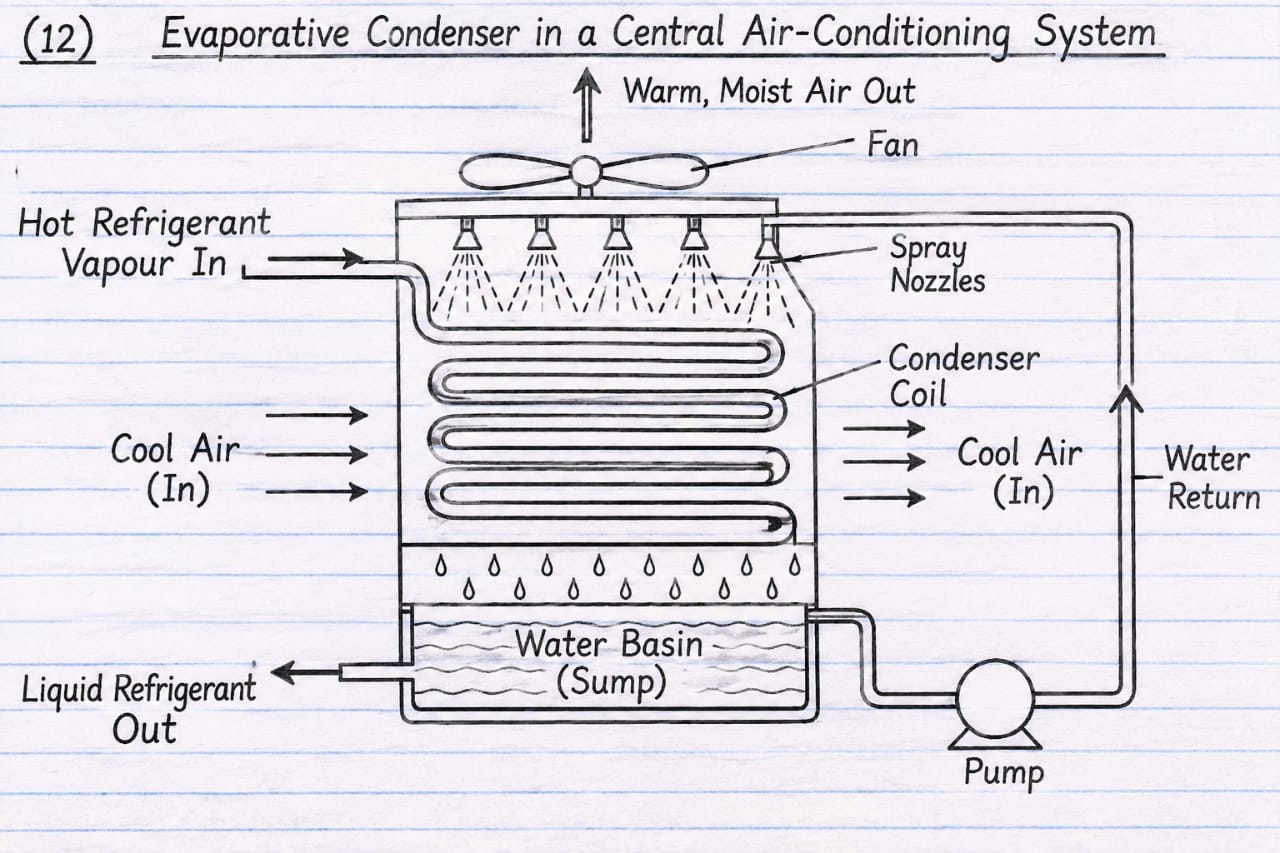
OPERATION OF AN EVAPORATIVE CONDENSER:
(i) Hot, high-pressure refrigerant vapour from the compressor enters the condenser coil through the inlet pipe.
(ii) Water is continuously sprayed over the outside surface of the condenser coil through spray nozzles.
(iii) A fan draws air through the condenser, allowing some of the sprayed water to evaporate.
(iv) During evaporation, the water absorbs heat from the refrigerant flowing inside the coil.
(v) As heat is removed, the refrigerant temperature decreases and the vapour condenses into a high-pressure liquid.
(vi) The warm, moist air is discharged into the atmosphere through the fan outlet.
(vii) The remaining water falls into the collection basin (sump), where it is pumped back to the spray nozzles for reuse.
(viii) The condensed liquid refrigerant flows to the receiver and then to the expansion valve, where its pressure and temperature are reduced before entering the evaporator.
═══════════════════════════
(13a)
Two compressors may be used in a transport refrigeration unit to provide reliable and continuous cooling during transportation.
(i) Main compressor: The main compressor is driven by the vehicle engine or an independent power source. It circulates refrigerant through the refrigeration system to maintain the required temperature inside the refrigerated compartment.
(ii) Standby compressor: The standby compressor is usually electrically driven and operates when the vehicle engine is switched off or when the main compressor fails. It helps to maintain the required temperature and prevent spoilage of goods during loading, unloading or parking.
(13b)
(i) Good thermal insulation: The material should have low thermal conductivity to reduce heat entering the refrigerated compartment.
(ii) Strength and durability: It should withstand vibration, shocks and mechanical stresses during transportation.
(iii) Resistance to moisture and corrosion: It should resist water absorption, rust and deterioration to maintain hygiene and long service life.
═══════════════════════════
(14a)
A sea-water cooled marine refrigeration system uses seawater to remove heat from the refrigerant in the condenser. Its main components include:
(i) Sea-water pump: Circulates seawater through the cooling system to provide the required cooling flow.
(ii) Sea-water strainer: Removes dirt, sand, shells and other foreign materials from the seawater before it enters the cooling system.
(iii) Sea-water-cooled condenser: Transfers heat from the refrigerant to the circulating seawater, causing the refrigerant vapour to condense into liquid.
(14b)
(i) Temperature difference: The amount of heat transferred depends on the temperature difference between the air passing over the evaporator and the refrigerant inside the coil. A greater temperature difference generally increases heat transfer.
(ii) Surface area: The larger the surface area of the evaporator coil, the greater the area available for heat exchange and the amount of heat that can be absorbed.
(iii) Airflow rate: The rate at which air passes over the evaporator affects heat transfer. Higher airflow within the design limits generally increases the amount of heat transferred.
═══════════════════════════
(15a)
The coefficient of performance (COP) of an industrial refrigeration unit is the ratio of the refrigerating effect produced to the work or energy supplied to the compressor. It indicates the efficiency of the system by showing how much heat is removed from the refrigerated space for each unit of energy supplied.
It is expressed as:
COP = Refrigerating effect ÷ Work input
or, in symbols:
COP = Qₗ ÷ W
Where:
(i) Qₗ = heat removed from the refrigerated space (heat absorbed in the evaporator), in kW
(ii) W = work or energy supplied to the compressor, in kW
A higher COP indicates a more efficient refrigeration system, because more heat is removed with less energy input. The COP rises with a higher evaporating temperature and a lower condensing temperature.
(15b)
(i) Removal of heat: The condenser removes heat absorbed by the refrigerant in the evaporator, together with the heat added during compression.
(ii) Condensation of refrigerant: It changes the refrigerant from a high-pressure vapour into a high-pressure liquid by releasing heat to the surroundings.
(iii) Supply of liquid refrigerant: It provides liquid refrigerant to the expansion device for pressure reduction and subsequent cooling.
═══════════════════════════
(16a)
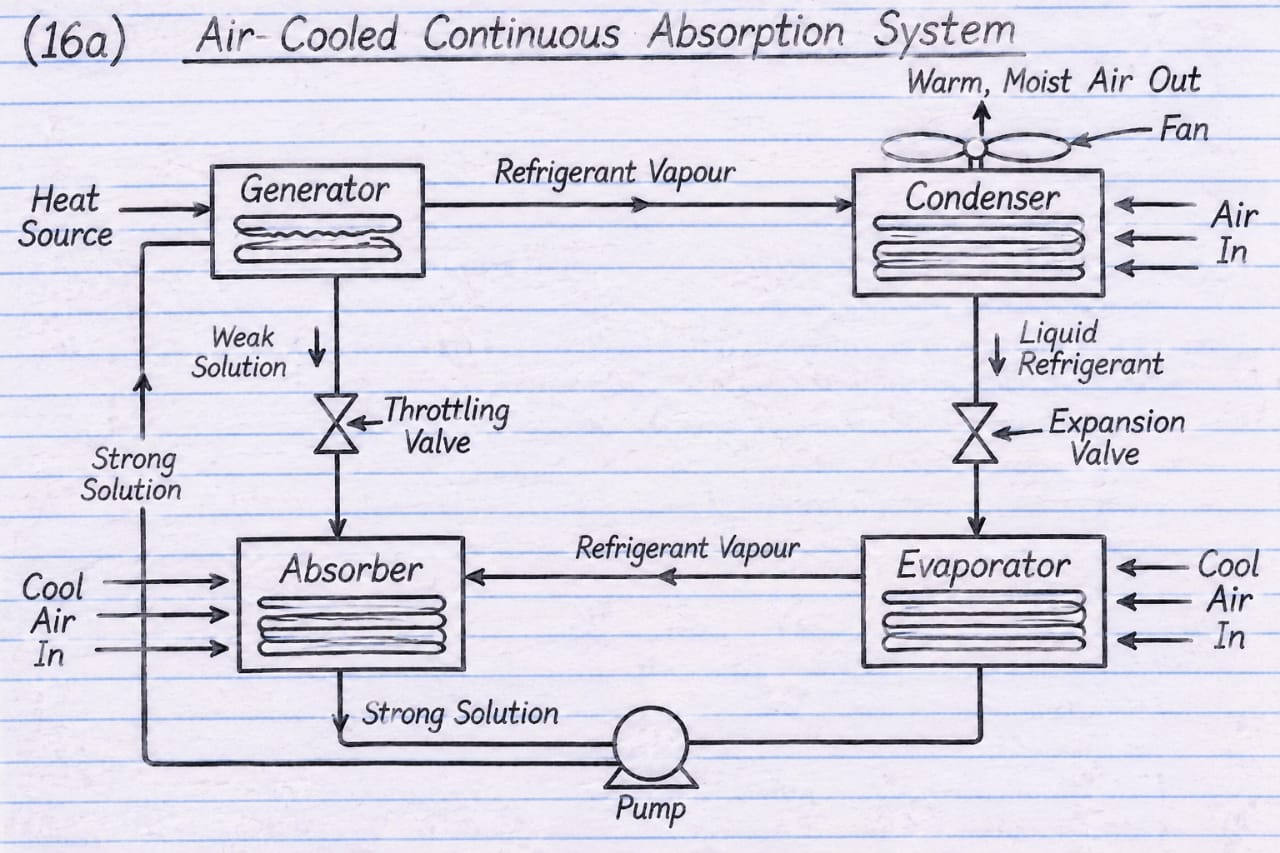
(16b)
(i) Steam.
(ii) Gas burner or direct-fired gas.
═══════════════════════════
(17a)
The condensing unit is usually installed outside the building in a location that allows adequate ventilation and easy heat discharge. It can be located in the following places:
(i) Concrete platform outside the building: The unit can be mounted on a firm concrete base at ground level to provide stability and allow easy maintenance.
(ii) Roof of the building: It can be installed on the roof where there is sufficient space, structural support and free air circulation.
(iii) External wall bracket or balcony: It can be mounted on a strong external wall bracket or placed on a suitable balcony where adequate ventilation and safe access are available.
(17b)
(i) Cleaning or replacing air filters: Remove and clean reusable filters regularly or replace disposable filters to maintain proper airflow and cooling efficiency.
(ii) Cleaning the outdoor unit: Remove leaves, dust and other obstructions around the condenser to allow free circulation of air and effective heat rejection.
(iii) Cleaning the indoor unit and condensate drain: Keep the air-conditioning unit clean and ensure that the condensate drain is free from blockage to prevent water leakage and unpleasant odours.
═══════════════════════════
COMPLETED….We Remain Your Favourite Site.
Ensure You Subscribe For Your Next Paper
═══════════════════════════
Leave a Reply