
 HOME
 WAEC
 NECO
 07048281409

BEST EXPO RUNZ ASSISTANCE WEBSITE. NO.1 BEST DELIVERY OF EXAM RUNZ
100% GUARANTEE OF GETTING ANSWERS MIDNIGHT..IT’S OUR CULTURE, NO DOUBT
═══════════════════════════
TRACE THE ANSWER WORDINGS TO YOUR QUESTION OPTIONS
BIOLOGY OBJ
1. D. tick
2. E. Transports oxygen
3. B. oxygen
4. C. excretion
5. D. genotype
6. B. expressed
7. E. liver
8. E. kidney
9. B. genetics
10. A. storage of bile
11. A. proteins
12. B. water
13. C. toad
14. A. liver
15. B. Glomerular nephritis
16. D. femur
17. B. Iris
18. B. biting and chewing
19. D. 7
20. C. butterfly
21. C. protection of endangered species
22. D. hygrometer
23. D. sewage
24. A. thick waxy cuticles
25. E. trypsin
26. B. sweep net
27. A. cilia
28. E. chloroplast
29. C. diabetes mellitus
30. B. Crude oil
31. A. B
32. D. 4:0
33. D. 55
34. A. azotobacter
35. E. Tilapia
36. E. femur
37. B. cat
38. A. ovary
39. D. paramecium
40. E. Bacteria
41. A. kidney
42. E. desert
43. E. sunlight
44. B. herbivores
45. E. mating
46. D. artery
47. B. thoracic
48. E. cercus
49. E. assists in respiration
50. E. prophase
51. A. estuary
52. B. joint
53. E. magnesium
54. B. cytokinin
55. B. 0.04%
56. B. energy production
57. C. nodule
58. A. pulmonary vein
59. B. proboscis
60. C. host
═══════════════════════════
INSTRUCTION: ANSWER THREE(3) QUESTIONS ONLY
(QUESTIONS BELOW); Kindly check this question against your own question paper to know which number it is in your own paper, so you can change it accordingly;
(1ai)
Define the term geotropism. (2 marks)
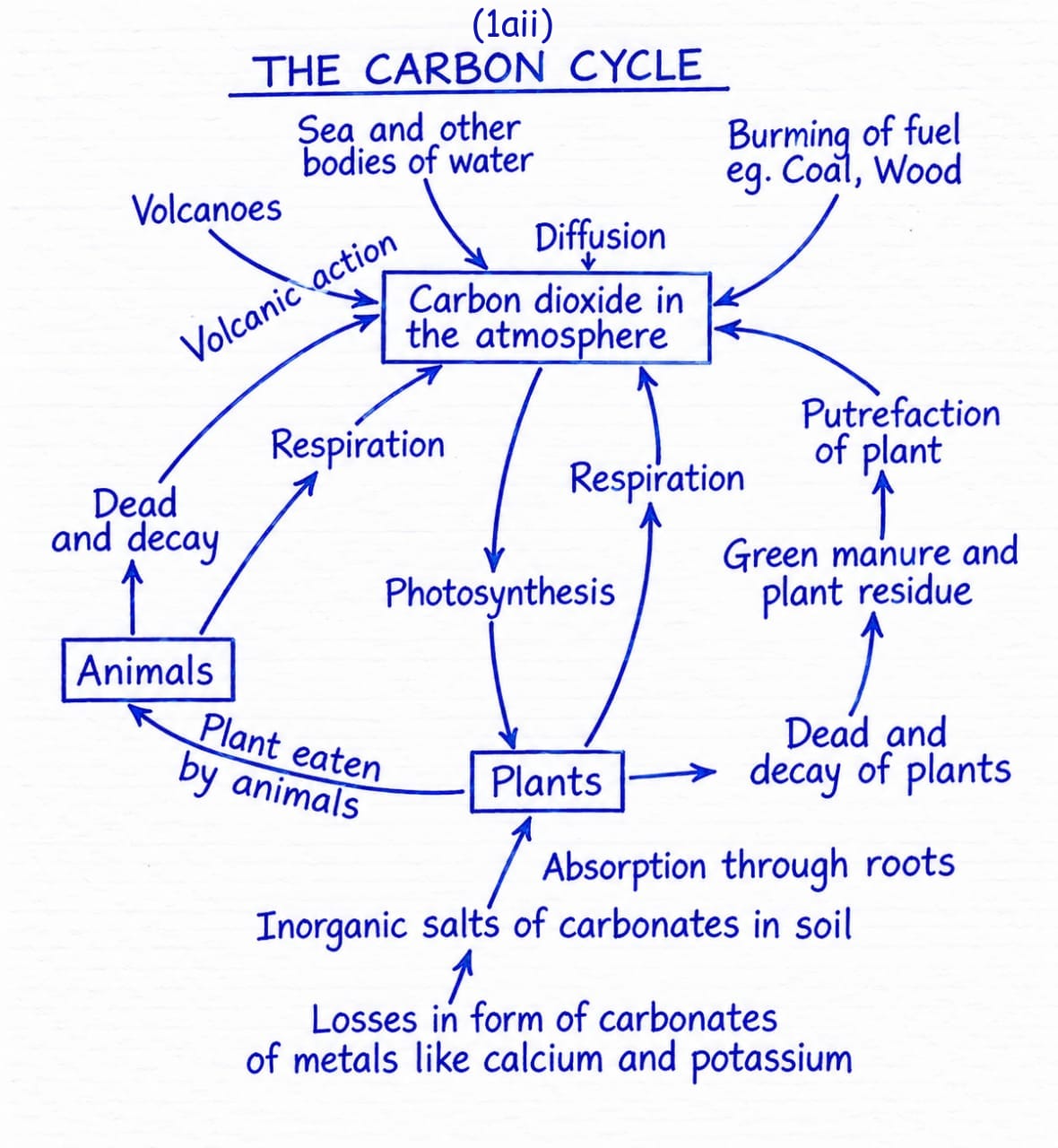
(1aii)
With the aid of a diagram, explain the process of carbon cycle. (7 marks)
(1aiii)
Name three examples of macronutrients. (3 marks)
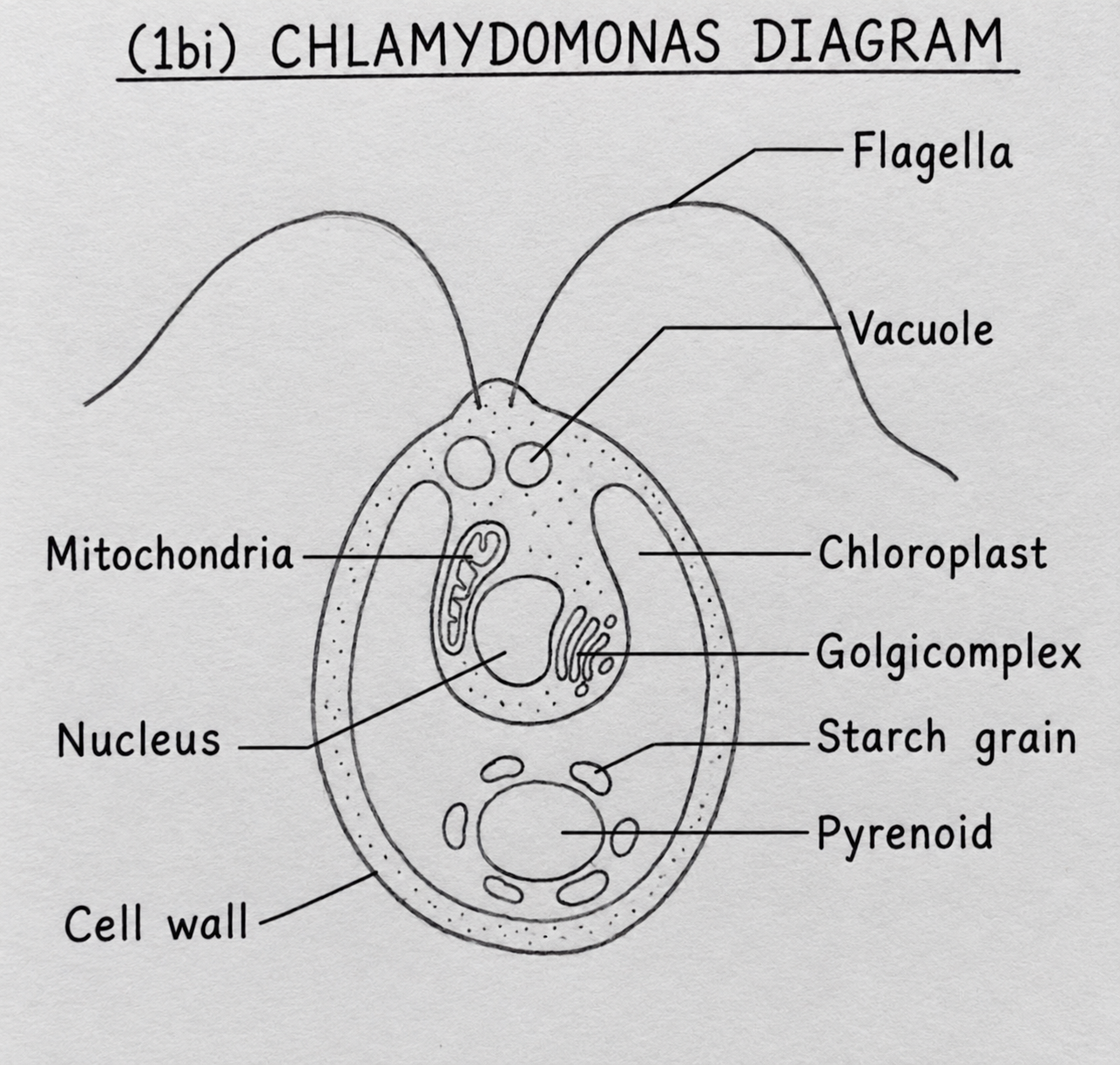
(1bi)
Draw a well labelled diagram (8 to 10 cm long) of Chlamydomonas. (8 marks)
(1bii)
Mention the structure used for excretion in:
Euglena (1 mark)
Cockroach (1 mark)
(ANSWERS BELOW);
(1ai)
Geotropism is the directional growth movement of a plant or its parts in response to the force of gravity. For example, roots grow towards gravity (positive geotropism), while shoots grow away from gravity (negative geotropism).
(1aii)
(1aiii)
(i) Nitrogen
(ii) Phosphorus
(iii) Potassium
(1bi)
(1bii)
(i)Euglena: Contractile vacuole.
(ii)Cockroach: Malpighian tubules.
═══════════════════════════
(QUESTIONS BELOW); Kindly check this question against your own question paper to know which number it is in your own paper, so you can change it accordingly;
(2ai)
List three examples of fruits that exhibit marginal placentation. (3 marks)
(2aii)
Give three beneficial effects of microorganisms to manufacturing industries. (3 marks)
(2aiii)
Outline four functions of mammalian skin. (4 marks)
(2bi)
List five methods used in food preservation. (5 marks)
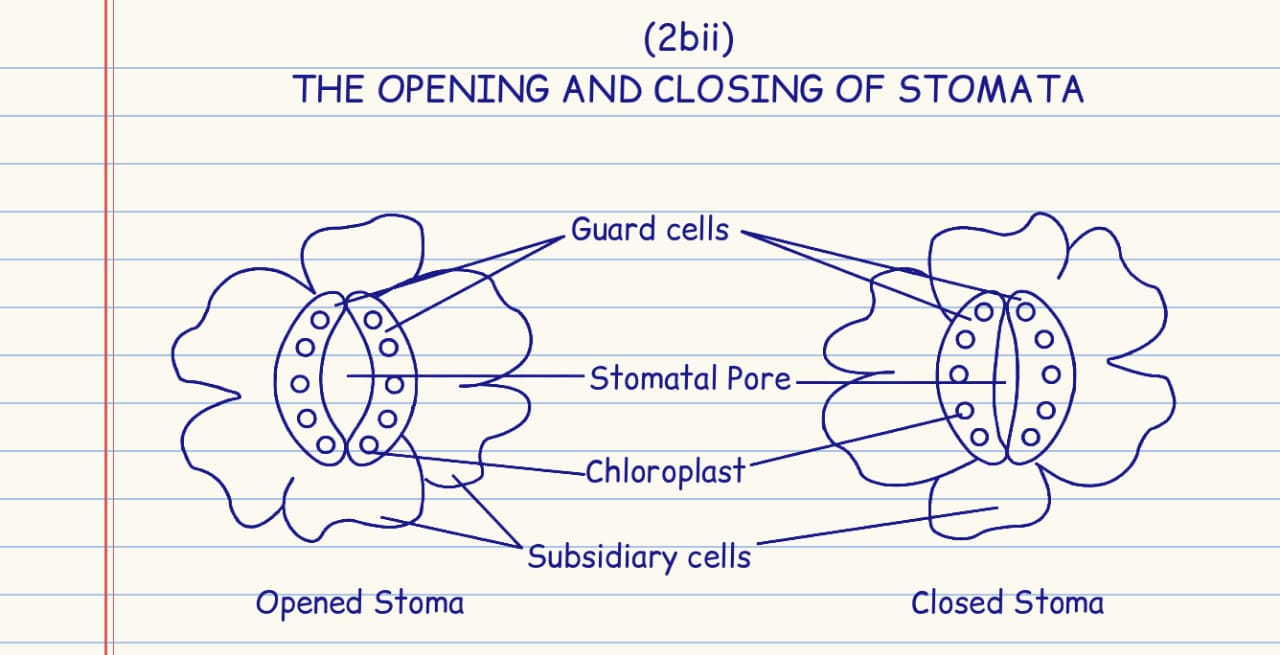
(2bii)
Using a diagram, explain the opening and closing of stomata. (5 marks)
(ANSWERS BELOW);
(2ai)
(i) Pea
(ii) Bean
(iii) Groundnut
(2aii)
(i) Bread production: Yeast is used in baking to make dough rise through fermentation.
(ii) Alcohol production: Yeast is used to produce alcoholic beverages such as beer and wine.
(iii) Dairy production: Bacteria such as Lactobacillus are used in the production of yoghurt and cheese.
(2aiii)
(i) Protection: The skin protects the body against injury, harmful microorganisms and excessive loss of water.
(ii) Temperature regulation: It regulates body temperature through sweating and changes in the diameter of blood vessels.
(iii) Excretion: It removes excess water, mineral salts and small amounts of urea through sweat.
(iv) Sensation: Sensory receptors in the skin detect touch, pressure, pain, heat and cold.
(2bi)
(i) Drying or dehydration.
(ii) Refrigeration.
(iii) Freezing.
(iv) Canning.
(v) Salting.
(2bii)
═══════════════════════════
(QUESTIONS BELOW); Kindly check this question against your own question paper to know which number it is in your own paper, so you can change it accordingly;
(3ai)
State the stages involved in photosynthesis. (2 marks)
(3aii)
Explain the process of transpiration in plants. (5 marks)
(3aiii)
Mention three functions of fats and oil in man. (2 marks)
(3bi)
State three secondary sexual characteristics in boys. (3 marks)
(3bii)
List three components of blood. (3 marks)
(3biii)
Give four methods of conserving wildlife. (4 marks)
(ANSWERS BELOW);
(3ai)
(i) Light-dependent stage (light reaction).
(ii) Light-independent stage (dark reaction).
(3aii)
Transpiration is the loss of water vapour from the aerial parts of plants, mainly through the stomata of the leaves. In other words;
The process occurs as follows:
(i) Water is absorbed from the soil by the root hairs through osmosis.
(ii) The water moves through the root tissues into the xylem vessels.
(iii) It is transported upwards through the xylem to the leaves.
(iv) Water evaporates from the moist surfaces of the leaf cells into the air spaces.
(v) The water vapour diffuses out through the stomata into the atmosphere.
(3aiii)
(i) They provide energy to the body.
(ii) They insulate the body against heat loss.
(iii) They protect delicate internal organs against physical injury.
(3bi)
(i) Growth of facial, pubic and armpit hair.
(ii) Deepening of the voice.
(iii) Broadening of the shoulders and development of muscles.
(3bii)
(i) Plasma.
(ii) Red blood cells.
(iii) White blood cells.
(3biii)
(i) Establishment of game reserves and national parks.
(ii) Enforcement of laws against illegal hunting and poaching.
(iii) Prevention of bush burning and destruction of natural habitats.
(iv) Public education on the importance of wildlife conservation.
═══════════════════════════
(QUESTIONS BELOW); Kindly check this question against your own question paper to know which number it is in your own paper, so you can change it accordingly;
(4ai)
Define the term hibernation. (2 marks)
(4aii)
With the aid of a diagram, explain fertilisation in plants. (6 marks)
(4aiii)
Mention five characteristics of wind pollinated flowers. (5 marks)
(4bi)
State two differences between a sperm and an ovum. (4 marks)
(4bii)
Name three types of asexual reproduction. (3 marks)
(ANSWERS BELOW);
(4ai)
Hibernation is a state of prolonged inactivity or deep sleep in some animals during cold periods or unfavourable environmental conditions. During this period, body temperature, heartbeat and metabolic activities are reduced to conserve energy.
(4aii)
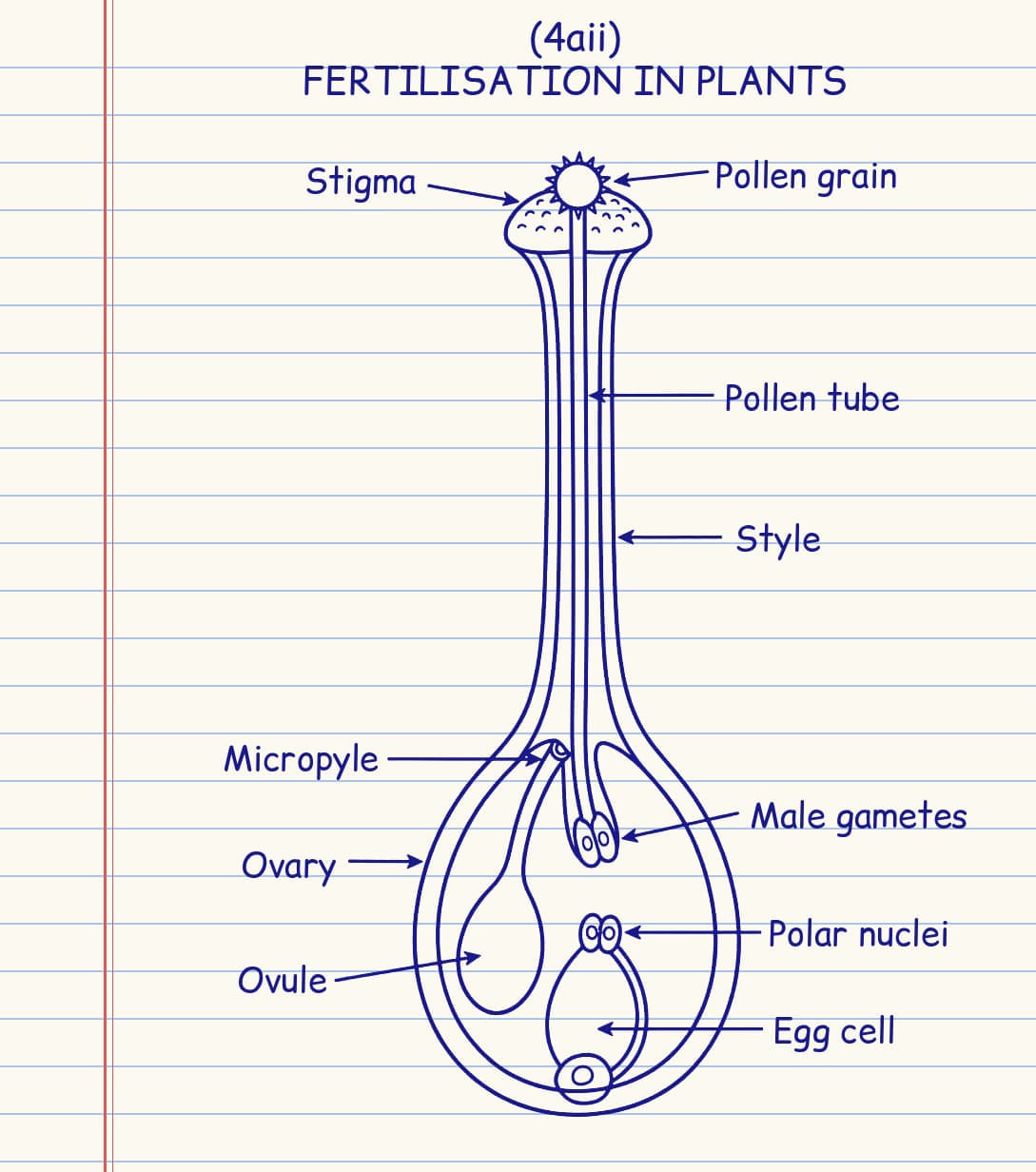
Fertilisation in flowering plants is the fusion of the male gamete from the pollen grain with the female gamete (egg cell) in the ovule to form a zygote.
(4aiii)
(i) They produce large quantities of light, dry pollen grains.
(ii) Their anthers are long and exposed outside the flowers.
(iii) Their stigmas are large, feathery and exposed to trap pollen grains.
(iv) Their petals are usually small, dull-coloured or inconspicuous.
(v) They usually have no scent or nectar because they do not attract insects.
(4bi)
(i) Size: A sperm cell is small, while an ovum is large.
(ii) Movement: A sperm cell is motile and moves with the aid of a tail, while an ovum is non-motile.
(4bii)
(i) Binary fission.
(ii) Budding.
(iii) Spore formation.
═══════════════════════════
(QUESTIONS BELOW); Kindly check this question against your own question paper to know which number it is in your own paper, so you can change it accordingly.
(5ai)
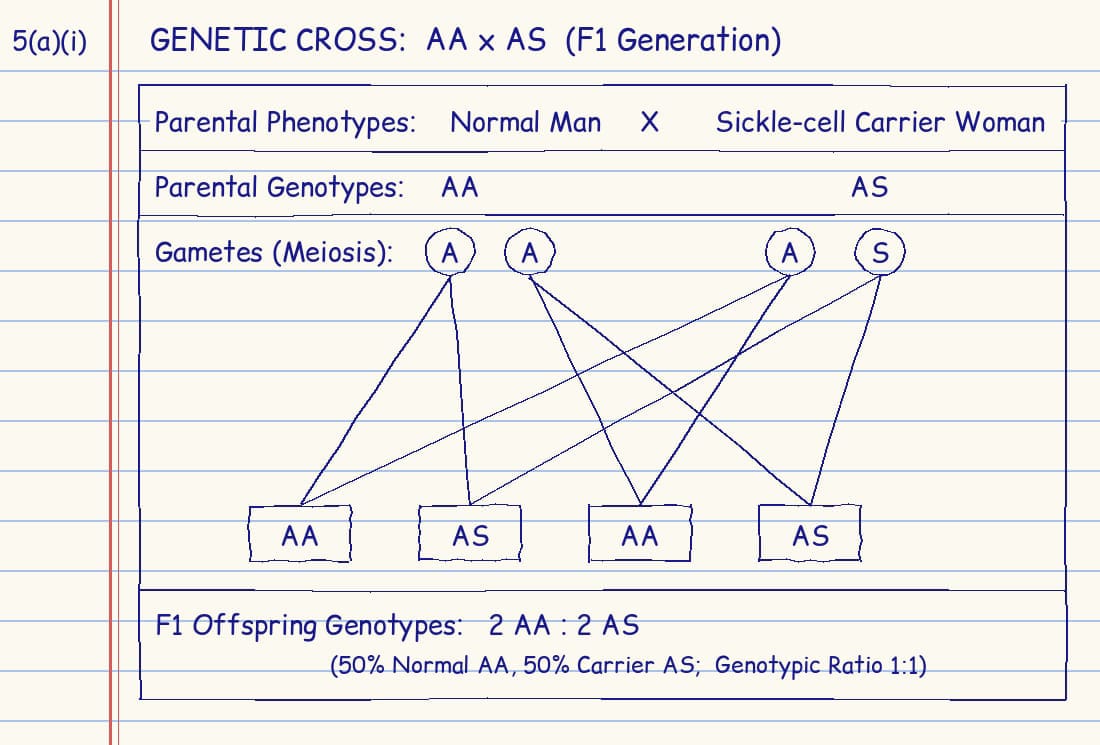
A man with genotype AA marries a woman with genotype AS. By means of crossing, show the genotype of their offspring in the first filial generation. (6 marks)
(5aii)
Give two examples of morphological variation. (2 marks)
(5bi)
State four adaptive features of hydrophytes. (4 marks)
(5bii)
Explain the effects of the following abiotic factors on population of organisms in an aquatic habitat: temperature, salinity and turbidity. (6 marks)
(5biii)
Enumerate two functions of motor neurons. (2 marks)
(ANSWERS BELOW)
(5ai)
(5aii)
(i) Differences in human height.
(ii) Differences in skin colour.
(5bi)
(i) They possess large air spaces for buoyancy and gaseous exchange.
(ii) They have reduced root systems because water is readily available.
(iii) They have thin or absent cuticles to allow easy absorption of water.
(iv) Floating leaves have stomata mainly on their upper surfaces for gaseous exchange.
(5bii)
(i) Temperature: Temperature affects the rate of metabolism, growth and reproduction of aquatic organisms. Very high or low temperatures may cause death or force organisms to migrate, thereby reducing their population.
(ii) Salinity: Salinity affects the ability of aquatic organisms to regulate water and salt levels in their bodies. Organisms that cannot tolerate changes in salinity may die or migrate to more suitable habitats.
(iii) Turbidity: High turbidity reduces the amount of sunlight penetrating water, thereby limiting photosynthesis in aquatic plants. It may also reduce visibility and interfere with feeding and survival of aquatic animals.
(5biii)
(i) They transmit nerve impulses from the central nervous system to muscles and glands.
(ii) They stimulate effectors to produce responses, such as muscle contraction.
═══════════════════════════
COMPLETED….We Remain Your Favourite Site.
Ensure You Subscribe For Your Next Paper
═══════════════════════════
Leave a Reply