
 HOME
 WAEC
 NECO
 07048281409

BEST EXPO RUNZ ASSISTANCE WEBSITE. NO.1 BEST DELIVERY OF EXAM RUNZ
100% GUARANTEE OF GETTING ANSWERS MIDNIGHT..IT’S OUR CULTURE, NO DOUBT
═══════════════════════════
F/ACCOUNTING OBJ
01-10: EAACCEAADE
11-20: ADDEBDADAD
21-30: AAABBBBBEC
31-40: BDDAAEBDBE
41-50: CECACAECAE
51-60: DCBECAEADC
═══════════════════════════
SECTION A: ANSWER TWO QUESTIONS ONLY
(1a)
(i) It helps to determine the profit or loss of a business.
(ii) It provides financial information for decision-making.
(iii) It helps to detect and prevent fraud and errors.
(iv) It provides records of business transactions for future reference.
(1b)
A ledger is the principal book of account in which transactions recorded in the subsidiary books are classified and posted into their respective accounts.
(1c)
=DIFFERENCES=
(i) A receipt and payment account records all cash received and paid during a period, while an income and expenditure account records only revenue income earned and expenses incurred during a period.
(ii) A receipt and payment account is prepared on a cash basis, while an income and expenditure account is prepared on an accrual basis.
=SIMILARITIES=
(i) Both are prepared by non-profit-making organisations such as clubs, societies and associations.
(ii) Both summarise the financial transactions of an organisation over a particular accounting period.
═══════════════════════════
(2a)
A trial balance is a statement prepared to show the balances of all ledger accounts at a particular date, with the debit balances listed in one column and credit balances in another to check the arithmetical accuracy of the accounts.
(2b)
(i) Subscription in Arrears: This is the amount of subscription owed by members of an organisation for the current accounting period but not yet paid. It is treated as an asset in the statement of financial position.
(ii) Subscription in Advance: This is the amount of subscription paid by members before it becomes due for the next accounting period. It is treated as a liability in the statement of financial position.
(iii) Inter-departmental Transfer: This refers to the movement of goods, materials or services from one department of an organisation to another department within the same organisation.
(2c)
(i) Owners and shareholders.
(ii) Managers.
(iii) Employees.
(iv) Creditors.
(v) Investors.
(vi) Government and tax authorities.
(vii) Banks and other financial institutions.
(viii) Customers.
═══════════════════════════
(3a)
(i) Error of omission.
(ii) Error of commission.
(iii) Error of principle.
(iv) Compensating error.
(v) Complete reversal of entries.
=EXPLANATION OF TWO ERRORS=
(i) Error of Omission: This occurs when a business transaction is completely or partially left out of the books of account. For example, when goods sold for cash are not recorded in the accounting records.
(ii) Error of Principle: This occurs when a transaction is recorded in the wrong class of account contrary to accounting principles. For example, the purchase of machinery is wrongly recorded as an expense instead of a fixed asset.
(3b)
(i) To record opening entries when a business begins its operations.
(ii) To record adjustment entries at the end of an accounting period.
(iii) To record correction of errors discovered in the books of account.
(3c)
Goodwill is an intangible asset that represents the good reputation and favourable image of a business, which enables it to attract customers and earn higher profits. It may arise from factors such as good customer relationships, quality products, efficient management and a strategic business location.
═══════════════════════════
(4a)
Double entry is an accounting system in which every business transaction is recorded in two accounts, with one account debited and another account credited with an equal amount. This ensures that the accounting equation remains balanced.
(4b)
(i) Detection of Errors: It helps to identify errors made by the bank or the business when recording financial transactions.
(ii) Prevention of Fraud: It helps to discover unauthorised withdrawals and suspicious transactions in the bank account.
(iii) Identification of Differences: It explains the differences between the balance shown in the cash book and that shown in the bank statement.
(iv) Accuracy of Records: It helps to ensure that the cash book is correct and updated to reflect the actual bank transactions.
(4c)
(i) Opening stock.
(ii) Purchases.
(iii) Sales.
(iv) Closing stock.
(v) Carriage inward.
(vi) Cost of goods sold.
═══════════════════════════
SECTION B: ANSWER THREE(3) QUESTIONS ONLY
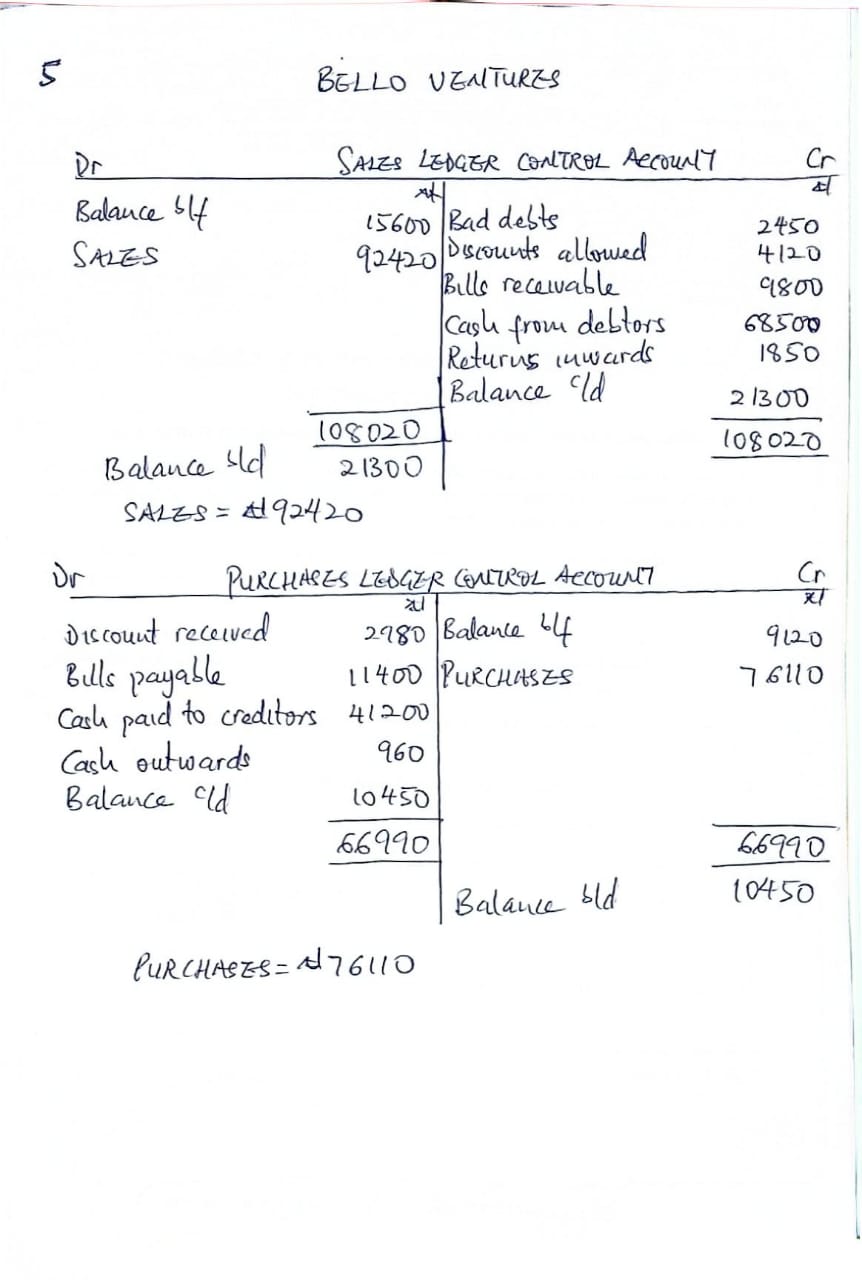
(5)
═══════════════════════════
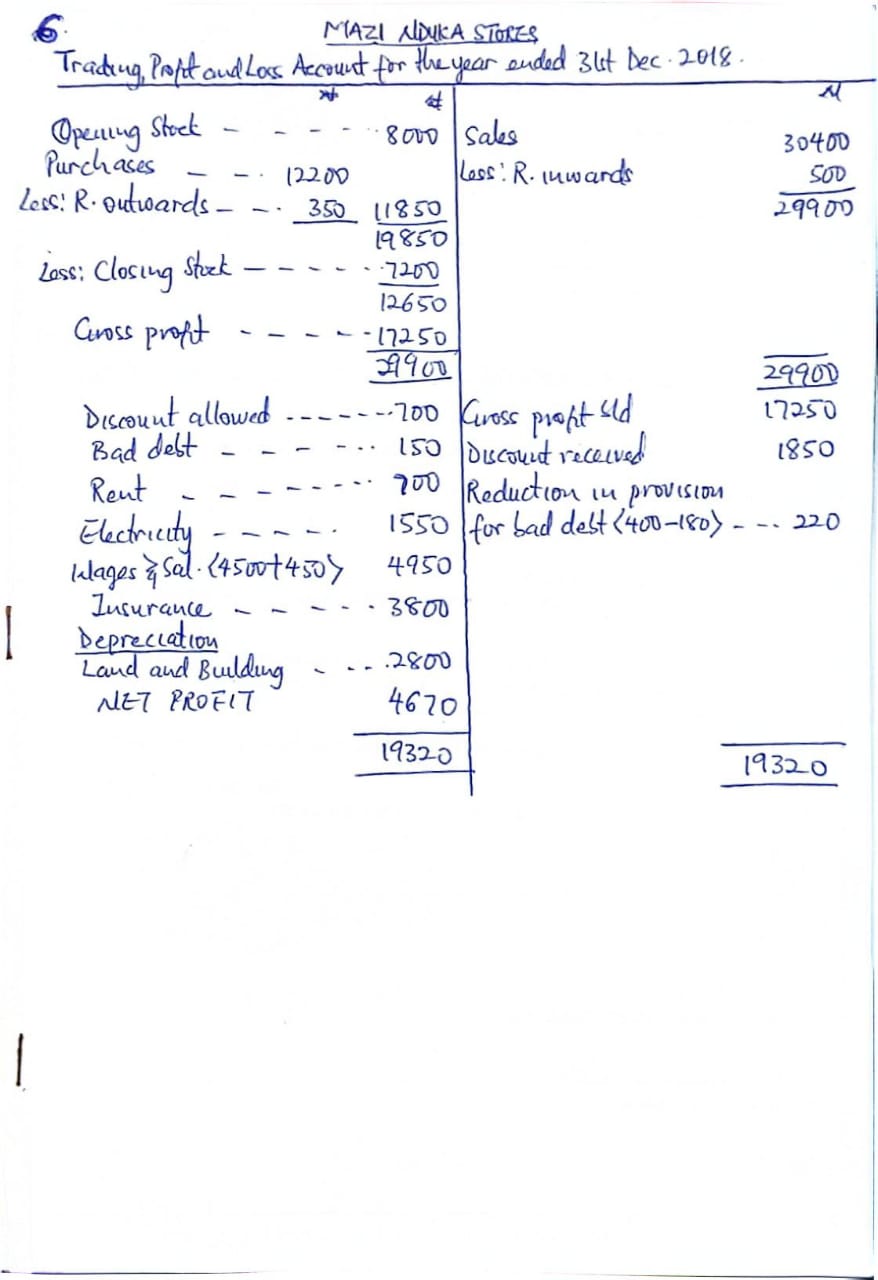
(6)
═══════════════════════════
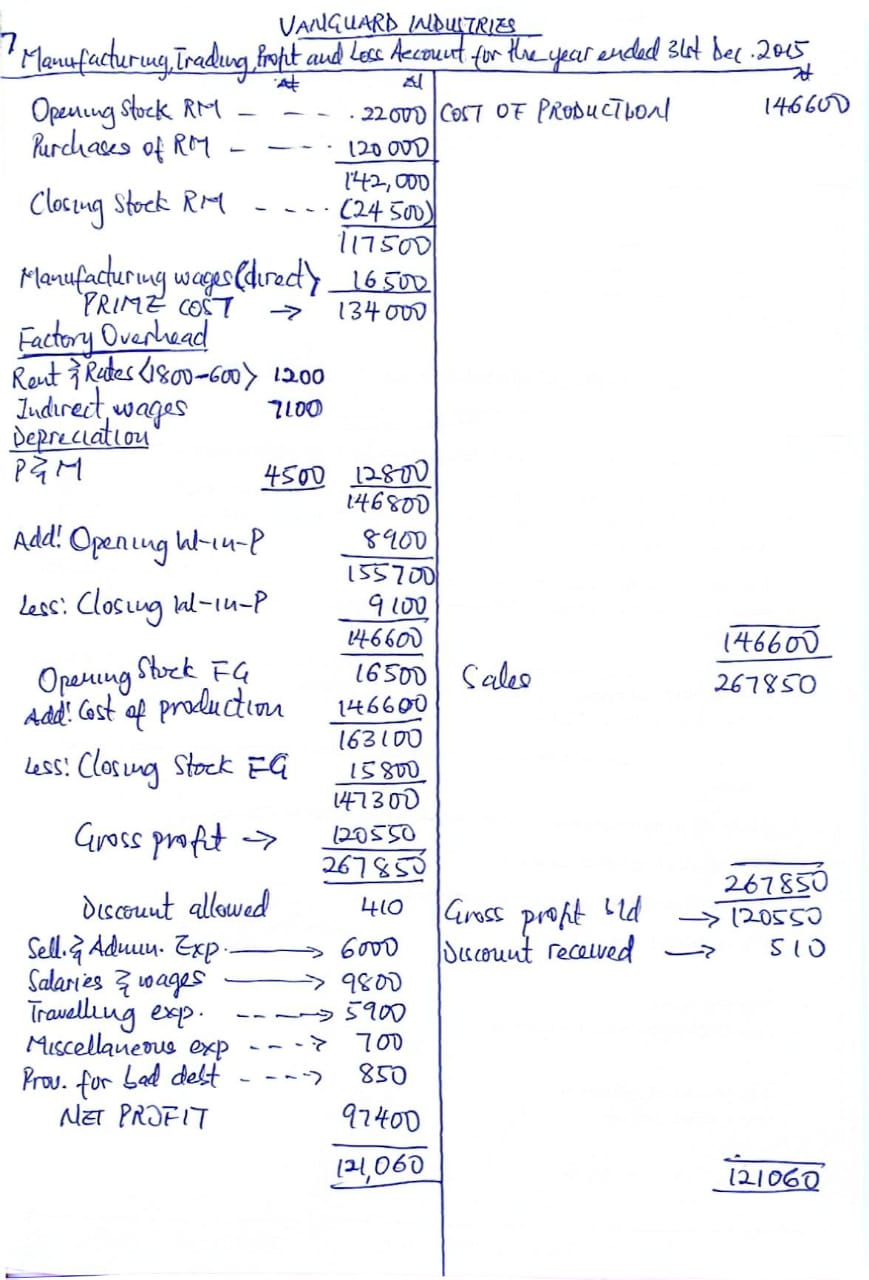
(7)
═══════════════════════════
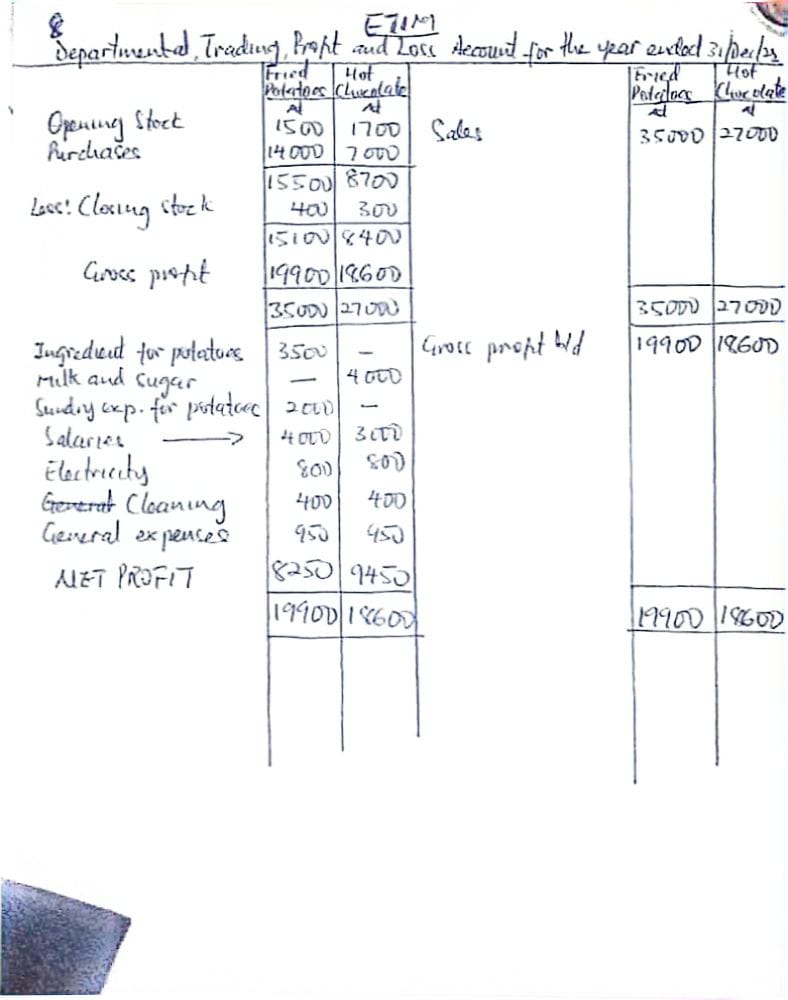
(8)
═══════════════════════════
COMPLETED….We Remain Your Favourite Site.
Ensure You Subscribe For Your Next Paper
===================================
Leave a Reply